

Plant Hoarder
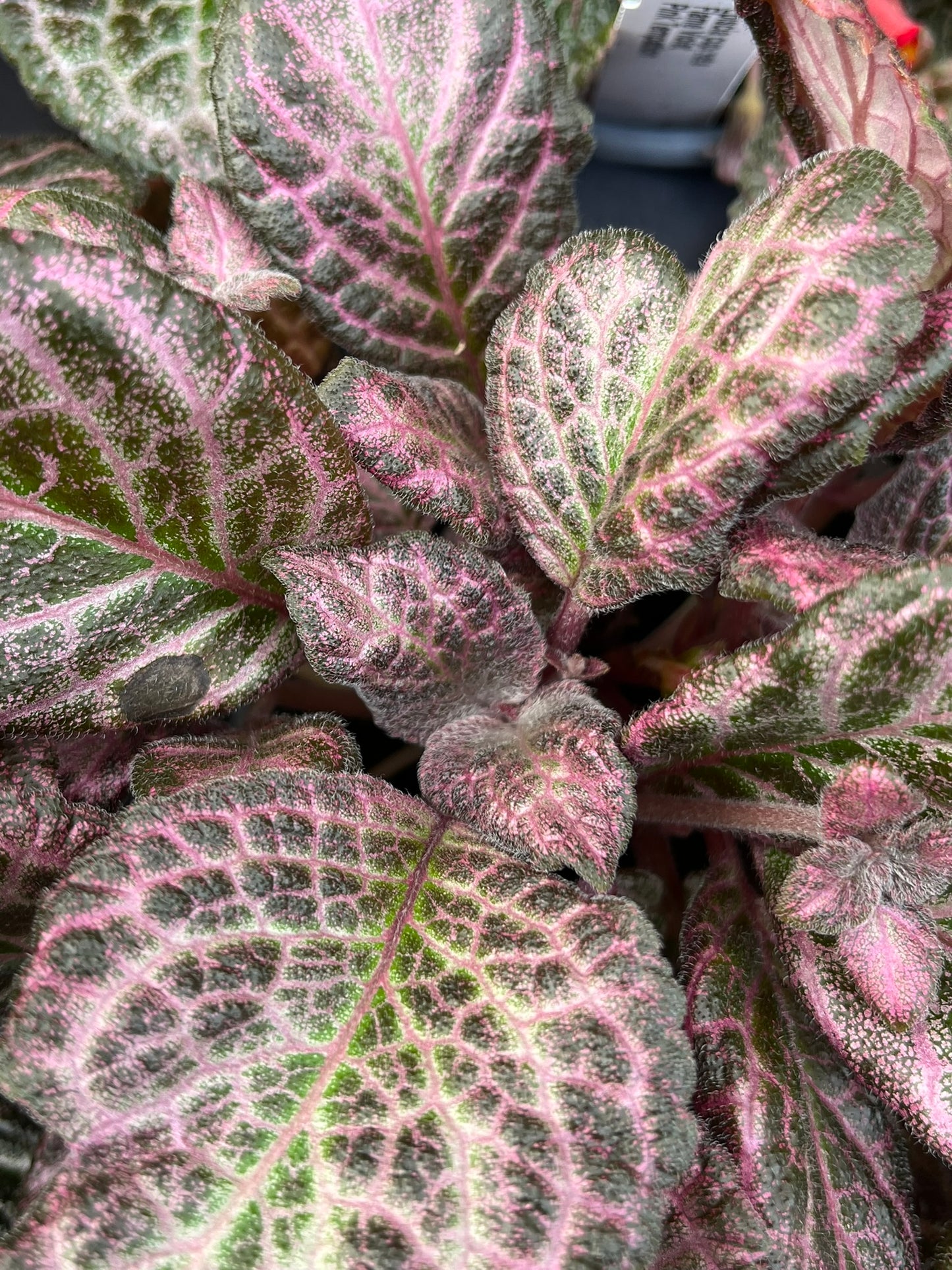
Episcia cupreata, Flame Violet, 'Pink Temptation'
Episcia cupreata, Flame Violet, 'Pink Temptation'
Couldn't load pickup availability
Share
Hardiness Zone:9
Sun Exposure:Part Shade, Mostly Sun, Part Sun, Mostly Shade, and Shade
Note: Episcia will change foliage colors due to light and environmental conditions. We grow in lower light and colors will be darker. High light will bring out the distinctive colors more.
Episcia cupreata ‘Pink Temptation’
A Touch of Velvet, a Pop of Pink, and Pure Joy in Every Leaf
If you're searching for a houseplant that brings vivid color, soft texture, and irresistible charm to your indoor garden, look no further than Episcia cupreata ‘Pink Temptation’, a cultivar of the Flame Violet family. This tropical gem is more than just a pretty face—it’s easy to grow, loves warm indoor environments, and rewards you with its vibrant foliage and dainty blooms.
Let’s dive into what makes 'Pink Temptation' so special, and how you can grow it into a stunning showpiece.
Why You’ll Fall in Love with ‘Pink Temptation’
This plant earns its name honestly. The moment you see its blushing pink leaves with silvery highlights, it’s easy to feel tempted to take it home. Each leaf is velvety to the touch, with deep green borders and a soft shimmer under light. But that’s not all.
'Pink Temptation' also produces small, tubular flowers in shades of fiery coral or cherry red, adding another layer of contrast to its already captivating appearance. Even better? It’s not a high-maintenance diva. This Episcia fits beautifully on a shelf, windowsill, or plant stand where it can trail and spread gently.
Quick Facts at a Glance
-
Botanical name: Episcia cupreata ‘Pink Temptation’
-
Common name: Flame Violet
-
Plant type: Tropical perennial (usually grown as a houseplant)
-
Foliage: Velvety pink with green edges and silver patterns
-
Flowers: Small, tubular, red or coral-colored
-
Growth habit: Low-growing, spreading, and trailing
-
Light: Bright, indirect light
-
Watering: Moderate; prefers even moisture
-
Humidity: High; thrives in warm, moist air
-
Pet-friendly: Yes!
How to Grow Episcia ‘Pink Temptation’
Let’s make your growing experience joyful and successful. Here's everything you need to keep this beauty thriving.
1. Lighting: Bright but Gentle
Episcias love bright, indirect light. Place your 'Pink Temptation' near a north- or east-facing window. It can also do well under fluorescent or LED grow lights, making it a perfect desk or office plant.
Avoid direct sunlight. Those soft pink leaves can scorch quickly if exposed to harsh rays.
2. Watering: Keep It Moist, Not Soggy
This plant likes consistent moisture, but don’t let it sit in water. Here’s how to manage it:
-
Water when the top inch of soil feels dry.
-
Use room-temperature water to avoid shocking the roots.
-
Drain excess water—never let it stand in a saucer.
Too much water can cause root rot. On the other hand, if it dries out completely, the plant may wilt and lose vigor.
3. Humidity: The Higher, the Happier
Episcia ‘Pink Temptation’ is a humidity lover. Think tropical rainforest vibes.
-
Ideal humidity: 60–80%
-
Use a humidity tray, group it with other plants, or run a small humidifier nearby.
-
Bathrooms and kitchens can be great homes if they get the right light.
Dry air will lead to crispy leaf edges. You want lush, full leaves—not sadness at the tips.
4. Soil: Light and Airy
Use a soil mix that drains well but retains some moisture. A good mix might include:
-
2 parts peat moss or coco coir
-
1 part perlite or vermiculite
-
1 part orchid bark or African violet mix
This kind of mix supports strong roots and prevents waterlogging.
5. Temperature: Cozy and Warm
Episcias do not like the cold. Aim to keep the room between 65°F and 80°F (18°C–27°C).
Avoid:
-
Drafty windows
-
Air conditioning vents
-
Sudden temperature drops
Treat it like you would a tropical guest—keep it warm and comfortable.
6. Fertilizing: Feed for Color and Growth
From spring through early fall, feed your Episcia every 2 to 4 weeks with a balanced, water-soluble fertilizer diluted to half strength.
Look for fertilizers labeled for:
-
African violets
-
Flowering houseplants
In the dormant winter months, you can ease up on feeding.
7. Propagation: Easy as a Strawberry Plant
One of the joys of growing Episcia ‘Pink Temptation’ is how easily it spreads.
It sends out runners (stolons), which develop little baby plants (called plantlets) at their ends. Here’s what to do:
-
Let the plantlets root in a small pot of moist soil while still attached to the mother.
-
Once they have a few good roots, clip the stem and grow them on their own!
You’ll have extra plants in no time—perfect for gifts or expanding your collection.
Common Issues and Easy Fixes
Every plant has its quirks, but don’t worry—we’ve got solutions.
-
Wilting or limp leaves? Check soil moisture. Likely too dry or too wet.
-
Faded leaf color? It might need more light (but not direct sun).
-
Brown leaf edges? Increase humidity.
-
Powdery mildew or rot? Improve airflow and avoid water on the leaves.
Stay observant, and you’ll spot any issues before they take over.
Display Tips and Styling Ideas
Because ‘Pink Temptation’ trails so beautifully, it's ideal for:
-
Hanging baskets
-
Plant shelves
-
Terrariums with airflow
-
Decorative bowls with a humidity dome
It pairs well with other low-light, high-humidity plants like ferns, peperomias, or baby tears.
If you love a soft, romantic color palette in your indoor garden, this one’s a star player.
Let’s Recap
Here’s why Episcia cupreata ‘Pink Temptation’ belongs in your plant family:
-
Dazzling pink-and-silver foliage
-
Adorable tubular flowers
-
Low-growing and compact—great for small spaces
-
Easy to care for with the right humidity and light
-
Quick to propagate and fun to grow
This plant brings more than beauty. It brings joy. From its soft textures to its vibrant hues, ‘Pink Temptation’ is a daily reminder of the magic plants can offer in our homes.
Whether you're a new plant parent or a seasoned grower, this one’s a keeper. Let it charm you—and everyone who sees it.